Private Chef in Short Hills, NJ: What You Get and What It Costs
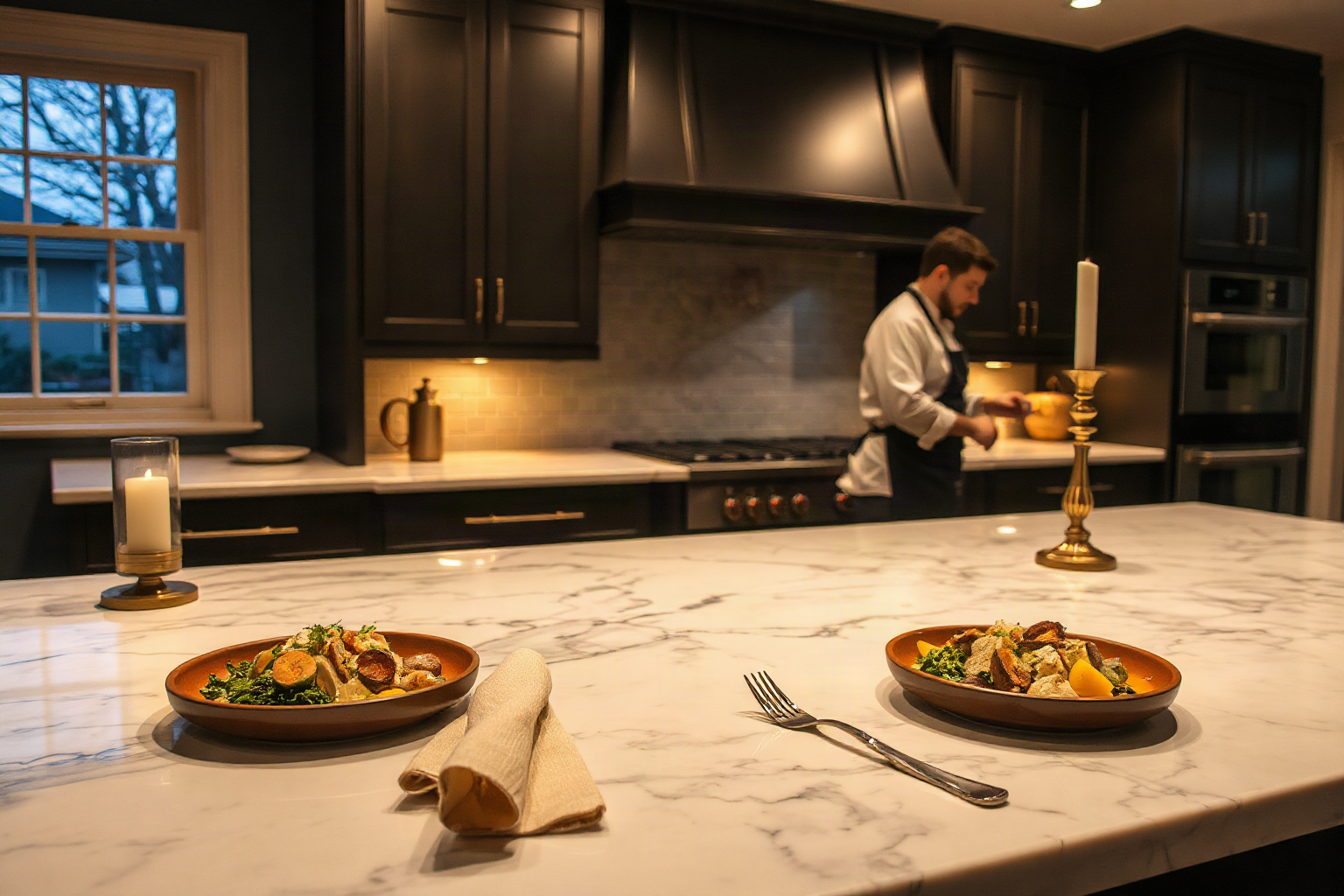
Short Hills runs on a particular kind of schedule. Between the Midtown Direct commute from the station on Chatham Road, the evening drive to a practice or a recital, and the ordinary work of running a household, dinner is often the first thing to give. A private chef Short Hills NJ households bring in is less a novelty than a practical answer — someone who cooks in your own kitchen, to your family's preferences, on a rhythm that fits your week. This is what that service looks like in practice, what it costs, and how booking works.
Why Do Short Hills Households Choose an In-Home Chef?
The appeal here is not really about luxury for its own sake. It is about the fact that a household in the Hartshorn or Glenwood section can sit down to a properly cooked meal at 6:30 on a Tuesday without anyone having planned it, shopped for it, or cleaned up after it. Millburn Township families tend to eat well and care about where food comes from — the farmers markets, the emphasis on whole ingredients rather than packaged shortcuts. An in-home chef meets that standard without asking you to build your week around it.
There is also the matter of the kitchen itself. Cooking in your home means your equipment, your pantry, your plates, your table. Nothing is transported across the county in a warmer. A dinner for eight in a dining room off Old Short Hills Road tastes the way it should because it was finished twenty feet from where it is served.
And there is the calendar. Short Hills weeks are not uniform. A Tuesday in late September looks nothing like a Thursday in early June, when the recital season, the end-of-year school events, and the last of the spring travel all land in the same fortnight. A chef who cooks in your home can flex around that — adding a session before a busy stretch, shifting a dinner party when a conflict appears, cooking ahead for a week you know will be chaos. That adaptability is a large part of what you are actually paying for, and it is difficult to replicate with any service that cooks somewhere else.
What Does the Service Actually Include?
A private chef engagement begins with a conversation, not a menu. I ask what your household actually eats — the foods your children will reliably finish, the dishes you are tired of, any dietary needs or restrictions, how many nights a week you want covered. From there I design menus and handle sourcing, prep, cooking, and kitchen cleanup. You come home to a stocked refrigerator and a kitchen that looks better than you left it.
For dinner parties, the work is different. A seated dinner for ten in Short Hills means timing, plating, and service handled so that you are at the table with your guests rather than in the kitchen. I build the menu around the occasion and the season, source the seafood and produce, and run the evening from first course to last.
The scope is deliberately broad because households differ. Some clients want four dinners and a lunch built for the week. Others want one elaborate Saturday dinner a month and nothing else. Some want the refrigerator stocked before they leave for a week in August; others want a standing Tuesday and Thursday that never changes. All of it is arranged in the same initial conversation, and none of it requires you to fit a package that was designed for someone else.
How Do In-Home Dinner Parties Work?
Short Hills has a long tradition of entertaining at home — the kind of dinner where the guest list is deliberate and the evening is unhurried. That is the format I cook for most often. A typical party runs four to six courses, built around what is best that week rather than a fixed repertoire. Sustainable seafood is a particular focus: I source deliberately, and I will tell you honestly when something is not worth serving.
The practical benefit is that hosting stops being a production. You choose the date and the guest list. I handle the rest — menu, sourcing, cooking, service, and the kitchen at the end of the night. You are a guest in your own home, which is the entire point.
Consider a recent example. A family in the Knollwood section had planned a seated dinner for twelve to mark a milestone birthday, and the original plan had been to book a restaurant. Two weeks out, the guest list shifted and the restaurant could not accommodate the change. We moved the evening home instead: a five-course menu built around late-summer tomatoes and a simply prepared wild striped bass, plated at the table, with the kitchen returned to order before the coffee was poured. The host's comment afterward was that she had not realized how much of the evening she usually spent worrying. That is the difference between catering a party and hosting one.
What Does Weekly Meal Prep and Whole-Foods Cooking Look Like?
Most Short Hills households I cook for start with weekly prep and stay with it. The model is straightforward: one or two cooking days a week, a menu agreed in advance, and a refrigerator stocked with food that reheats properly and holds up for days. This is whole-foods cooking — real ingredients, proper technique, nothing that needs a label to explain itself.
The difference from a delivery service is that the food is cooked for your household, in your kitchen, to your preferences, and it can change week to week. If a child suddenly refuses a vegetable or a schedule shifts, the menu shifts with it. Portions are sized to your family, not to a standard box.
A typical cooking day might produce a braised short rib that improves overnight, a grain salad built to hold its texture, roasted vegetables that reheat without turning to mush, and a pot of stock from the week's trimmings that becomes a soup by Thursday. The goal is not a refrigerator full of separate meals but a small, coherent repertoire your household can actually eat through — food that works on a plate together, that a teenager can serve themselves, and that does not require a decision at 6:15 on a Wednesday.
Can Menus Support Performance Nutrition and Athletes?
A meaningful part of my work is with athletes and performance-focused households, drawing on nutrition experience at the professional level. For Short Hills families with a child in serious competitive sport, or an adult training for something specific, that background changes how meals are built — protein timing, recovery-focused dishes, food that supports training rather than fighting it. It is not a diet plan. It is cooking that happens to be built with performance in mind.
In practice, that often means cooking around a training calendar rather than a menu. A swimmer with early-morning practices needs breakfast that is ready and light. A household with a fall sport and a spring sport in the same house needs two different rhythms in the same refrigerator. I have cooked for families where the week's meals were built around a single athlete's meet schedule, and for adults training for a first marathon who wanted the food handled so the training could be the only variable. The cooking stays familiar and seasonal; the structure underneath it is deliberate.
What It Costs
Pricing is transparent, and it depends on format rather than on guesswork. Weekly meal prep is typically priced per cooking session plus the cost of groceries, with the session fee scaling to household size and the number of meals prepared. In-home dinner parties are quoted per guest, with a minimum for smaller gatherings, and the figure covers menu design, sourcing, cooking, service, and cleanup. Groceries are passed through at cost with receipts.
I quote in writing before anything is booked, and the number does not move afterward unless you change the scope. If a format does not make sense for your household, I will say so rather than sell it. The right arrangement is the one you will actually keep using.
A word on how to read a quote, because the formats are not directly comparable. A per-session fee for weekly prep covers labor for a defined cooking day; the grocery cost varies with what you ask for and is passed through at cost, so a week built around seasonal vegetables costs less than one built around shellfish and prime cuts. A per-guest dinner party figure already includes the menu design, sourcing, service, and cleanup, which is why it looks larger next to a per-session number even when the underlying work is similar. Comparing the two without that context is how households end up choosing the wrong format. Ask for the breakdown and it will be plain.
How Booking Works
It starts with a short call or email. We talk through your household, your schedule, and what you want covered, and I follow with a written proposal — menu direction, format, and pricing. Once you approve, we set the first date. Most new weekly clients begin with a single trial session before committing to a recurring schedule; dinner parties are usually booked two to four weeks out, longer in the busy seasons.
From there it is a rhythm. Menus are sent ahead of each cooking day, you approve or adjust, and the work happens while you are at the office, at the station, or out for the afternoon.
Frequently Asked Questions
Do I need a large kitchen or special equipment? No. I cook in ordinary Short Hills kitchens every week, and I work with what is there. If a dish calls for something you do not own, I bring it or I choose another dish. The point of cooking at home is to use the home you have.
Can you cook for a household with allergies or a restricted diet? Yes, and it is best raised at the first conversation rather than the first cooking day. Restricted diets are a design constraint, not an obstacle — the menu is built around them from the start, and cross-contact is handled deliberately in your kitchen.
What if we are away for a week? The schedule pauses. Weekly clients skip sessions when they travel, and many ask for a stocked refrigerator before they leave and a fresh one on the day they return.
Can you cook while we are not home? Most of my weekly clients are not home during the cooking day. Access is arranged in advance, and the kitchen is left clean and the refrigerator labeled.
How far ahead should we book a dinner party? Two to four weeks is comfortable for most dates. The busy seasons — late spring, the holidays, and the weeks around graduation — fill earlier, so it is worth raising a date as soon as it is fixed.
Is there a minimum commitment? No long contract is required to begin. Most households start with a single trial session and decide from there.
Local Trust Signals
I have cooked in Essex County and the surrounding area for years, and a substantial share of my work is now repeat weekly clients and the dinner parties they refer. I know the local suppliers worth using, the produce that is actually good in a given month, and the practical realities of cooking in Short Hills kitchens — the layout, the equipment, the timing that works when guests arrive at seven. That familiarity is not marketing. It is why the first dinner usually goes smoothly.
A Local Testimonial
"Chef Red took over our weeknight dinners and we have not ordered takeout since. He cooks in our kitchen, our children actually eat what he makes, and the pricing was clear from the first conversation." — Household client, Short Hills
If you are considering a private chef in Short Hills, start with a conversation. Email Chef Red Raymundo with your household size, the format you are curious about — weekly prep, a dinner party, or performance-focused menus — and the rough schedule you have in mind. You will get a straight answer, a written quote, and a first date on the calendar. Servicing Short Hills and Millburn Township, with availability across New Jersey, New York, and Connecticut.